obsequious: obedient or attentive to an excessive or servile degree
beatitude: supreme blessedness.
bete noire: a detested person
bode: to be an omen of a particular outcome
dank: disagreeably damp, musty, and typically cold
ecumenical: worldwide or general in extent, influence, or application
fervid: intensely enthusiastic or passionate, esp. to an excessive degree
fetid: smelling extremely unpleasant
gargantuan: enormous
heyday: The period of greatest popularity, success, or power; prime
incubus: a nightmare
infrastructure: is basic physical and organizational structures needed for the operation of a society or enterprise
inveigle: persuade (someone) to do something by means of deception or flattery
kudos: fame and renown resulting from an act or achievement
lagniappe: something given or obtained gratuitously or by way of good measure
prolix: (of speech or writing) using or containing too many words; tediously lengthy
protégé: a person who is guided and supported by an older and more experienced or influential person
prototype: an early sample, model or release of a product built to test a concept or process or to act as a thing to be replicated or learned from
sycophant: a person who acts obsequiously toward someone important in order to gain advantage.
tautology: needless repetition of an idea, statement, or word
truckle: To be servile or submissive.
Wednesday, September 18, 2013

Thursday, September 12, 2013
Literary Analysis #1: Gulliver's Travels by Jonathan Swift
Gulliver’s Travels by Jonathan Swift, 1735 Edition.
Plot Summary:
The story begins with a letter written by Lemuel Gulliver, the novel’s protagonist. Having just gotten a book of his own published, Gulliver is angered by the mistakes he noticed in the mass produced versions. He feels insulted by the publisher categorizing his novel as fiction and sends them a corrected version of the book. The book in question is, in fact, the journal he wrote filled with tales of his travels to places previously unknown. And so, Gulliver’s Travels begins.
His travels begin as he awakens on the island of Lilliput after being shipwrecked. Here he is captured by a race of minuscule people, and although they are in awe of him, they are also weary of his presence. It is not long before Gulliver gains the adoration of the Lilliputians, they even go as far as feeding him which runs the risk of causing a famine. He provides the people with entertainment but is soon used as weapon by the royals against their enemy, the people of Blefuscu. An incident occurs and Gulliver is accused of treason and sentenced to death. He manages to escape to Blefuscu and sets sail back to England on an abandoned boat that he repaired.
After a short time spent in England, Gulliver begins on another journey. It is during this set of travels when Gulliver finds himself in a land filled with giants, Brobdingnag. Gulliver is quickly discovered by an oversized farmer who sees him as little more than a pet and is soon given to the queen. Gulliver is seen as a source of entertainment by the Brobdingnags and is disgusted by their appearance. They come across as senseless and dim-witted and is irritated by the amount of time his life has been put in jeopardy. An example of which is when his cage was swept up by a bird and tossed into the ocean.
During his next trek, following a pirate attack, Gulliver ends up on Luputa, a floating island above the land of Balnibarbi. Luputa is filled with intellectual and philosophical citizens who persecute the residents of Balnibarbi below. Gulliver is put off by the population of both lands as they seem too out of touch with reality. Gulliver soon leaves and travels to more place and encounters more people, eventually returning home.
The next part of the novel takes place while Gulliver is on his fourth and final trip. Gulliver faces the betrayal of his crew and soon arrives in an unidentified land. The occupants of this territory are a ratiocinative species of horses called the Houyhnhnms who rule over the brutish Yahoos. Gulliver teaches them aspects of the English culture, and in return, he is taught some of their. He enjoys his time with the Houyhnhnms much more than he would have expected but is soon forced out because he bared more resemblance to the Yahoos. Affected by his time with the Houyhnhnms, Gulliver now sees all humans as Yahoo-like and returns home, claiming all the places he has visited as property of England.
Theme:
In my opinion, the primary theme of Gulliver’s Travels is understanding of different societies and their cultures and ideals. As Gulliver visits various lands, he comes across many societies far different than his own and each of which are distinct from one another. Gulliver faces some with skepticism while others he embraces. His adventures influence his opinions on his own cultures and is unable to view English society as he once did before.
Tone:
Told from his perspective, Gulliver begins his travel as ambitious and full of zest. He is far too trusting and does not consider the consequences of his actions. This is proven in the first part of the novel with his interactions with the Lilliputians, "Besides, I now considered myself as bound by the law of hospitality to a people who had treated me with so much expense and magnificence. However, in my thoughts I could not sufficiently wonder at the intrepidity of these diminutive mortals, who durst venture to mount and walk on my body, while one of my hands was at liberty, without trembling at the very sight of so prodigious a creatures as I must appear to them."(Part one: Chapter one, Pages 30-31) As the story progress, Gulliver becomes more cynical and acerbated as showed during his time with the Brobdingnags, "This made me reflect how vain an attempt it is for a man to endeavor doing himself honor among those who are out of all degree of equality or comparison with him. And yet I have seen the moral of my own behavior very frequent in England since my return, where a little contemptible varlet, without the least title to birth, person, wit, or common sense, shall presume to look with importance, and put himself upon a foot with the greatest persons of the kingdom." (Part two: Chapter five, Pages 127-128) By the end of the novel, Gulliver has learned much from his journeys and is now much more philosophical than before. He questions human nature and the English culture, becoming unsure of himself in the process. "But the Houyhnhnms, who live under the government of Reason, are no more proud of the good qualities they posses, than I should be for not wanting a leg or an arm, which no man in this wits would boast of, although he must be miserable without them. I dwell the longer upon this subject from the desire I have to make the society of an English Yahoo by any means not insupportable, and therefore I here entreat those who have any tincture of this absurd vice, that they will not presume to appear in my sight." (Part 4: Chapter 12, Pages 294-295)
Literary Devices:
Jonathan Swift uses a large amount of literary devices throughout his novel. The most prominent one being satire. Swift satirizes subjects he viewed as trivial such as petty politics(Lilliput), religious differences(Luputa/Balnibarbi), and Western culture (Brobdingnags/Houyhnhnms). He depicts all the issues with the society he lived in and his opinions are still feasible today.
It is quite obvious that Gulliver’s Travel is an allegory. Swift channeled his options on war and human nature through Gulliver. He often remarks humans as foolish and war unnecessary. In fact, Gulliver often excretes his waste and fluids during such serious moments showing that Swift had thought these subjects as ridiculous.
Another device is point of view. The novel is told in first person perspective by Gulliver himself. It is a retelling of his adventures throughout the lands as written in his personal journal. The reader is able to know what exactly Gulliver was feeling and thinking during the course of the novel.
Going along with first person point of view is breaking the fourth wall. The novel reveals in the beginning that it is written for the publisher, the reader happens to take place of the publisher, reading the book in their place. Gulliver often addresses the reader, explaining to them various things that may otherwise be incomprehensible and difficult to understand.
Accompanying the novel are images to help the reader see the world that Gulliver is in. Imagery provides great assistance when describing aspects of the books that people at the time might have difficulty imagining; things such as rational horses and tiny people,.
Swift uses allusions to people, places, stories, and things to assist the reader in creating a clearer picture of what Gulliver is seeing and experiencing. Using comparisons, Swift is able to provide the reader with an understanding of the places Gulliver travels to.
Gulliver’s Travels was written in 1726. At that time, the French and English had a strained relationship. The war between Luputa and Balnibarbi symbolizes this; a tension caused by “the breaking of eggs” which is a reference to when the Protestants broke away from the Christians.
Irony is present somewhat in the novel. Gulliver often remarks that he had never heard of any of the places he visits or the type of people he’s met. This is considered to ironic because they are works of fiction created by Jonathan Swift, and yet Swift still includes Gulliver intensely pondering them.
Swift uses metaphors and similes to compare and contrast the sort of people Gulliver meets to civilized human being. By doing this, Swift is able to point out the flaws of our arrogant society and how we are no better than savages roaming the wild.
To illustrate his idea of human being as equally wild as animal, Swift personifies the Houyhnhnms, the horse race, giving them intelligence and making them capable of rational thought. He also takes away the qualities that makes us believe that humans are so great by depicting the Yahoos, the human brutes, as inferior to the Houhnhnms; depersonifying them.
All of the Above
I certainly did meet my expectations when grading the 1987 AP Exam. Having never taken an AP Exam before, I was a bit overwhelmed by it all. I did miss quite a few questions, but overall I did better than I thought I would. It was the in-depth questions that confused me the most as I am the type of person to take things literally.
Tuesday, September 10, 2013
An Unpopular Opinion: 9/11, Is it Time to Move On?
The following was posted by user The Unpopular Opinion on tumblr. As an American citizen, she expresses her belief of how it would be in America's best interest in moving on from the tragedy that took place on 9/11. The post has received some negative feedback, but surprisingly most of it is positive . Some users argued that bombings happen everywhere in the world, but America is the only nation to make such a big deal over this. Is it wrong to move on? Or would it be beneficial?
"I think that the USA needs to move on from September 11th.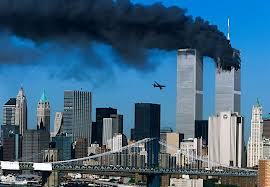
Now before all you pseudo-patriots come attempting to sway my opinion with your “unwavering loyalty to the country”, let me just take a minute to explain things. I am an American. I’m a female. And I was a young girl when the events took place.
The events are tragic. I’m not saying that they aren’t. But the US government and the media make it out to be some worldwide catastrophe that claimed the lives of millions of people around the world, when really, the event only killed about 2,600 people, which in the grand scheme of things for a large country like the United States isn’t a huge number.
Also, we’re Americans. Not only are we extremely self-absorbed with our ignorance, fueled by the liberally biased media, we’re hardly sympathetic for our victims. We forced unspeakable violence upon the natives when we came here, we killed almost 150,000 people in dropping the atomic bomb in Hiroshima and Nagasaki, and we’ve pointlessly murdered innocent people in the Middle East.
I understand that a lot of people died, and I should be respecting them. But while we honor the dead, we can’t have these extravagant 2-hour TV specials reading the names of all these people who died 12 years after the disaster. You don’t see Japan having these insane specials reading off the names of people who died in their terrorist attacks. Yes, that qualifies as a terrorist attack.
I honestly don’t care anymore. Terrorist attacks happen all the time in other countries every day. Just because this one happened in America doesn’t make it any different. It was a terrible thing that happened, but it’s been 12 years. We killed Osama. Why we are still in Iraq, I will never know, but that’s a story for another time. The USA is comparable to a person who still clings to their ex-spouse or significant other years after they broke up.
We have to move on with our lives. Not forget about it completely, but just move on and keep in it the back of our thoughts."
Vocab #4
Accolade(n.) An award or privilege granted for special honor.
Acerbity(n.) Sharp bitterness.
Attrition(n.) The action of weakening by attack or pressure.
Bromide(n.) An unoriginal idea or remark.
Chauvinist(n.) A person displaying aggressive or exaggerated patriotism.
Chronic(adj.) On going.
Expound(v.) Present and explain systematically and in detail.
Factionalism(n.) Relating or belonging to a faction.
Immaculate(adj.) Perfectly clean and tidy.
Imprecation(n.) A spoken curse.
Ineluctable(adj.) Unable to be resisted or avoided.
Mercurial(adj.) Subject to sudden or unpredictable changes of mood or mind.
Palliate(v.) To make less severe or unpleasant.
Protocol(n.) The official procedure or system of rules governing affairs of state or diplomatic
occasions.
Resplendent(adj.) Attractive and impressive through being richly colorful or sumptuous.
Stigmatize(v.) Describe or regard as worthy of disgrace or great disapproval.
Sub rosa(adv.) Happening or done in secret.
Vainglory(n.) Inordinate pride in oneself or one's achievements; excessively vain.
Vestige(n.) A trace of something that is disappearing or no longer exists.
Volition(n.) The faculty or power of using one's will.
Acerbity(n.) Sharp bitterness.
Attrition(n.) The action of weakening by attack or pressure.
Bromide(n.) An unoriginal idea or remark.
Chauvinist(n.) A person displaying aggressive or exaggerated patriotism.
Chronic(adj.) On going.
Expound(v.) Present and explain systematically and in detail.
Factionalism(n.) Relating or belonging to a faction.
Immaculate(adj.) Perfectly clean and tidy.
Imprecation(n.) A spoken curse.
Ineluctable(adj.) Unable to be resisted or avoided.
Mercurial(adj.) Subject to sudden or unpredictable changes of mood or mind.
Palliate(v.) To make less severe or unpleasant.
Protocol(n.) The official procedure or system of rules governing affairs of state or diplomatic
occasions.
Resplendent(adj.) Attractive and impressive through being richly colorful or sumptuous.
Stigmatize(v.) Describe or regard as worthy of disgrace or great disapproval.
Sub rosa(adv.) Happening or done in secret.
Vainglory(n.) Inordinate pride in oneself or one's achievements; excessively vain.
Vestige(n.) A trace of something that is disappearing or no longer exists.
Volition(n.) The faculty or power of using one's will.
Tuesday, September 3, 2013
Vocab #3
Apostate(n.) A person who abandons, rejects, or renounces a religious or political belief or principle.
Effusive(adj.) Expressing feelings of gratitude, pleasure, or approval in a heartfelt manner.
Impasse(n.) A situation in which no progress is able to be made because of a disagreement; a deadlock.
Euphoria(n.) A feeling or state of intense excitement or happiness.
Lugubrious(adj.) Looking or sounding sad and dismal.
Bravado(n.) A bold manner or a show of boldness intended to impress or intimidate.
Consensus(n.) General agreement.
Dichotomy(n.) A division or contrast between two things that are or are represented as being opposed or entirely different.
Constrict(v.) Make narrower by applying and encircling pressure.
Gothic(adj./n.) Of or in the style of architecture prevalent in western Europe in the 12th–16th centuries, characterized by pointed arches, rib vaults, and flying buttresses, together with large windows and elaborate tracery. (adj./n.) Relating to the Goths or their language.
Punctilio(n.) A fine or petty point of conduct or procedure.
Metamorphosis(n.) The process of transformation from an immature form to an adult form in two or more distinct stages.
Raconteur(n.) A person who tells anecdotes in a skillful and amusing way.
Sine qua non(n.) An essential condition; a thing that is absolutely necessary
Quixotic(adj.) Exceedingly idealistic; unrealistic and impractical.
Vendetta(n.) A blood feud in which the family of a murdered person seeks vengeance on the murderer or the murderer's family; revenge.
Non sequitur(n.) A conclusion or statement that does not logically follow from the previous argument or statement.
Mystique(n.) A fascinating aura of mystery, awe, and power surrounding someone or something.
Quagmire(n.) A soft boggy area of land that gives way underfoot.
Parlous(adj.) Full of danger or uncertainty; precarious. (adv.) Greatly or excessively.
Effusive(adj.) Expressing feelings of gratitude, pleasure, or approval in a heartfelt manner.
Impasse(n.) A situation in which no progress is able to be made because of a disagreement; a deadlock.
Euphoria(n.) A feeling or state of intense excitement or happiness.
Lugubrious(adj.) Looking or sounding sad and dismal.
Bravado(n.) A bold manner or a show of boldness intended to impress or intimidate.
Consensus(n.) General agreement.
Dichotomy(n.) A division or contrast between two things that are or are represented as being opposed or entirely different.
Constrict(v.) Make narrower by applying and encircling pressure.
Gothic(adj./n.) Of or in the style of architecture prevalent in western Europe in the 12th–16th centuries, characterized by pointed arches, rib vaults, and flying buttresses, together with large windows and elaborate tracery. (adj./n.) Relating to the Goths or their language.
Punctilio(n.) A fine or petty point of conduct or procedure.
Metamorphosis(n.) The process of transformation from an immature form to an adult form in two or more distinct stages.
Raconteur(n.) A person who tells anecdotes in a skillful and amusing way.
Sine qua non(n.) An essential condition; a thing that is absolutely necessary
Quixotic(adj.) Exceedingly idealistic; unrealistic and impractical.
Vendetta(n.) A blood feud in which the family of a murdered person seeks vengeance on the murderer or the murderer's family; revenge.
Non sequitur(n.) A conclusion or statement that does not logically follow from the previous argument or statement.
Mystique(n.) A fascinating aura of mystery, awe, and power surrounding someone or something.
Quagmire(n.) A soft boggy area of land that gives way underfoot.
Parlous(adj.) Full of danger or uncertainty; precarious. (adv.) Greatly or excessively.
Monday, September 2, 2013
Why This Book?
For the first literary analysis of the year, I chose Gulliver's Travels by Johnathan Swift. My choice was influenced by the commercials for the movie featuring Jack Black. Although I've never seen it and the reviews for the film weren't great, its silly qualities attracted me to the novel.
Subscribe to:
Posts (Atom)